🖼️ Loading...
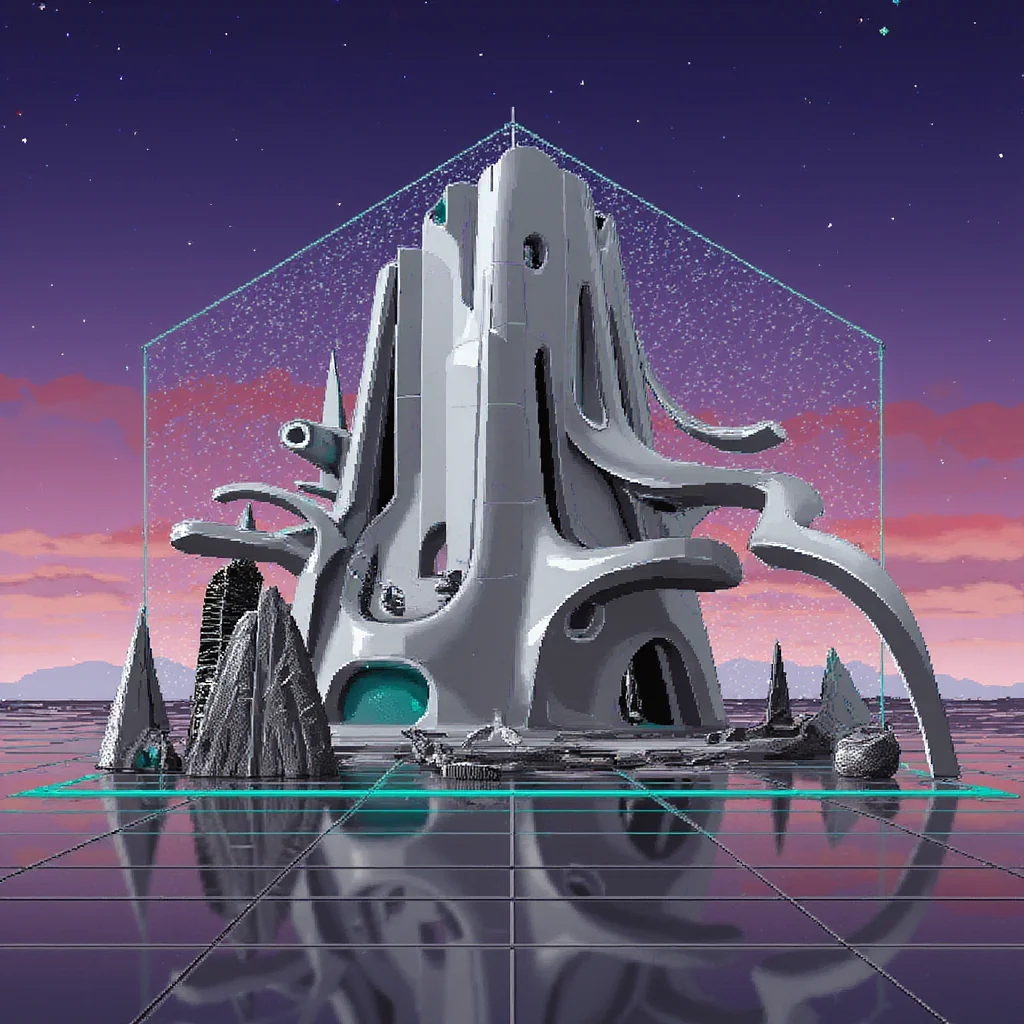
    Create an indie band album cover that seamlessly blends refined, retro-futuristic architectural elements with the distinctive aesthetic of 1990s 3D computer graphics, featuring an avant-garde building designed by OMA at its center. The composition is set within a precise, three-dimensional square grid, establishing a sense of structured order and digital symmetry.

At the heart of the design, showcase a striking OMA-designed building that embodies their signature avant-garde style—bold, unconventional forms with sharp angles, dramatic cantilevers, and innovative use of space. The building should feature visible low-polygon facets, echoing the early 3D modeling techniques, with its unique contours and minimalist details creating a futuristic yet grounded presence. Incorporate elements like floating platforms, fragmented facades, and asymmetrical extensions that enhance the structure’s complexity and evoke a sense of architectural innovation.

Surrounding the central OMA building, arrange additional architectural elements—slender spires, modular blocks, and hovering monoliths—that harmonize with the main structure's avant-garde aesthetic. These forms are strategically placed along the grid intersections, creating a balanced and dynamic composition that draws the viewer’s eye across the scene.

The color palette combines muted, metallic tones with subtle pastel hues to reinforce the retro-futuristic feel. Utilize brushed silvers, industrial grays, and cool chromes, complemented by gentle shades of lavender, teal, and peach. Introduce selective neon accents—such as glowing light strips along edges and soft, luminescent orbs—that evoke the ambiance of 90s sci-fi environments and enhance the digital aesthetic.

The background features a gradient sky transitioning smoothly from deep, dusky blues at the top to warm, twilight pinks near the horizon, suggesting a serene, otherworldly sunset. Subtle, translucent grid lines extend into the sky, creating a sense of infinite space and reinforcing the digital framework of the scene. Add faint, stylized stars or distant celestial bodies to deepen the cosmic atmosphere.

Lighting is soft and diffused, casting gentle shadows that emphasize the geometric forms without overwhelming them. Reflections from the metallic surfaces create a dynamic interplay between light and form, enhancing the three-dimensional quality of the artwork. The ground plane is a smooth, reflective surface—like polished glass or calm water—that mirrors the OMA building and surrounding elements, adding depth and complexity.

Integrate the band’s name and album title seamlessly into the composition by rendering them as part of the architectural environment. The text could appear as illuminated signage along the side of the central structure or be embossed onto one of the floating platforms. Use a sleek, sans-serif font with a slight retro flair, applying subtle 3D effects and shading to make the text feel like an inherent part of the scene. The lettering can emit a soft glow or be accented with neon highlights to ensure readability while maintaining cohesion with the overall design.

This album cover should evoke a sense of nostalgic futurism, blending the avant-garde innovation of OMA's architecture with the charm of early 3D graphics. The result is a visually striking, conceptually rich image that invites viewers into a meticulously crafted digital realm, perfectly capturing the artistic and forward-thinking spirit of the indie band.
    Prompt

    Create an indie band album cover that seamlessly blends refined, retro-futuristic architectural elements with the distinctive aesthetic of 1990s 3D computer graphics, featuring an avant-garde building designed by OMA at its center. The composition is set within a precise, three-dimensional square grid, establishing a sense of structured order and digital symmetry. At the heart of the design, showcase a striking OMA-designed building that embodies their signature avant-garde style—bold, unconventional forms with sharp angles, dramatic cantilevers, and innovative use of space. The building should feature visible low-polygon facets, echoing the early 3D modeling techniques, with its unique contours and minimalist details creating a futuristic yet grounded presence. Incorporate elements like floating platforms, fragmented facades, and asymmetrical extensions that enhance the structure’s complexity and evoke a sense of architectural innovation. Surrounding the central OMA building, arrange additional architectural elements—slender spires, modular blocks, and hovering monoliths—that harmonize with the main structure's avant-garde aesthetic. These forms are strategically placed along the grid intersections, creating a balanced and dynamic composition that draws the viewer’s eye across the scene. The color palette combines muted, metallic tones with subtle pastel hues to reinforce the retro-futuristic feel. Utilize brushed silvers, industrial grays, and cool chromes, complemented by gentle shades of lavender, teal, and peach. Introduce selective neon accents—such as glowing light strips along edges and soft, luminescent orbs—that evoke the ambiance of 90s sci-fi environments and enhance the digital aesthetic. The background features a gradient sky transitioning smoothly from deep, dusky blues at the top to warm, twilight pinks near the horizon, suggesting a serene, otherworldly sunset. Subtle, translucent grid lines extend into the sky, creating a sense of infinite space and reinforcing the digital framework of the scene. Add faint, stylized stars or distant celestial bodies to deepen the cosmic atmosphere. Lighting is soft and diffused, casting gentle shadows that emphasize the geometric forms without overwhelming them. Reflections from the metallic surfaces create a dynamic interplay between light and form, enhancing the three-dimensional quality of the artwork. The ground plane is a smooth, reflective surface—like polished glass or calm water—that mirrors the OMA building and surrounding elements, adding depth and complexity. Integrate the band’s name and album title seamlessly into the composition by rendering them as part of the architectural environment. The text could appear as illuminated signage along the side of the central structure or be embossed onto one of the floating platforms. Use a sleek, sans-serif font with a slight retro flair, applying subtle 3D effects and shading to make the text feel like an inherent part of the scene. The lettering can emit a soft glow or be accented with neon highlights to ensure readability while maintaining cohesion with the overall design. This album cover should evoke a sense of nostalgic futurism, blending the avant-garde innovation of OMA's architecture with the charm of early 3D graphics. The result is a visually striking, conceptually rich image that invites viewers into a meticulously crafted digital realm, perfectly capturing the artistic and forward-thinking spirit of the indie band.

    Generation Settings

    Parameters used to generate this content

    Created with
    ComfyUI
    CFG Scale3
    Sampler
    Euler
    Seed771770766383862
    Steps35
    ComfyUI Workflow

    The node graph used to generate this content — pan and zoom to explore, or download it to run in ComfyUI.

    Info
    Image
    Likes
    0
    Created
    6/3/2025
    Source
    CivitAI
    Models Used

    AI models used to generate this content

    Actions