🖼️ Loading...
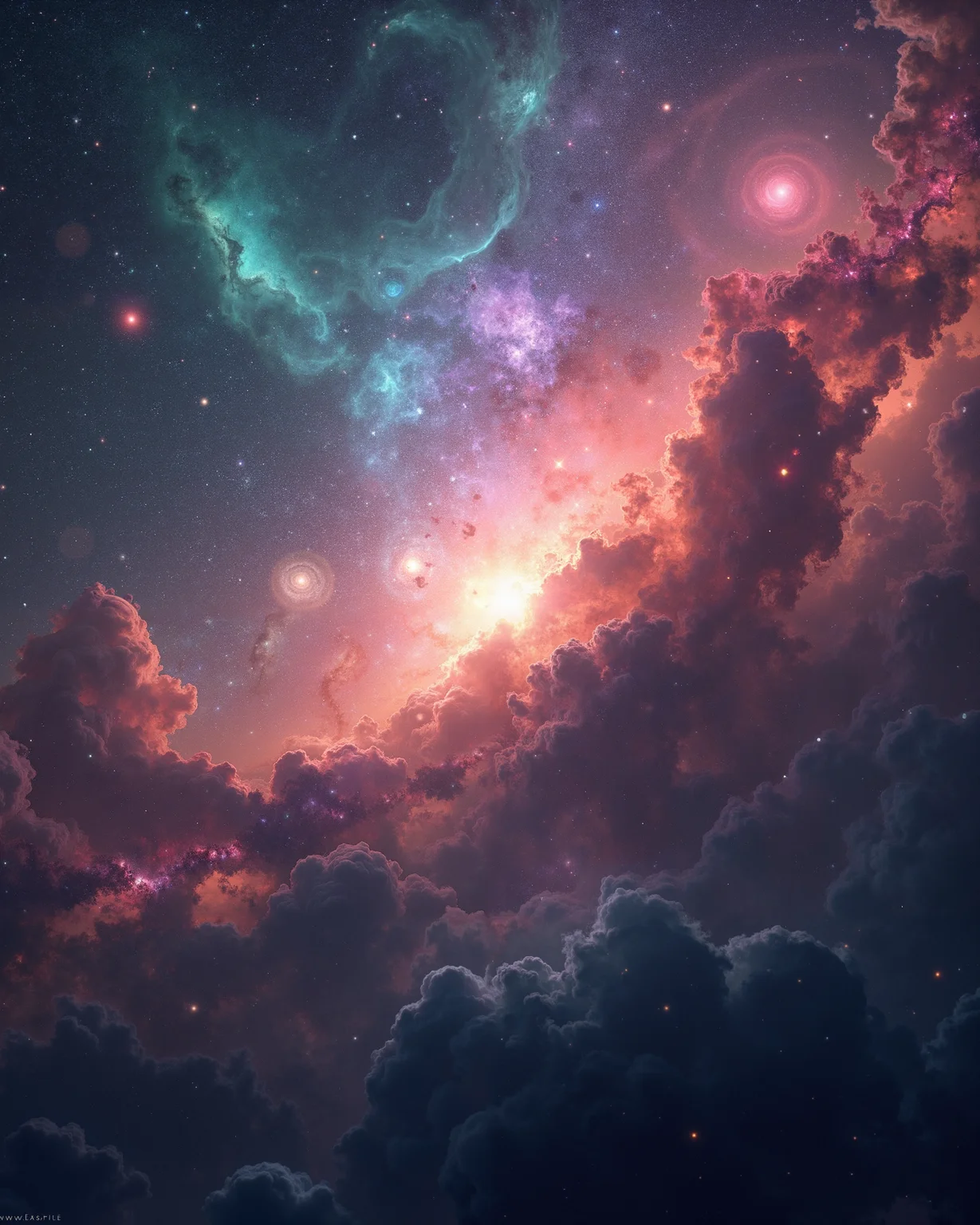
    Layer 1 (Primary Focus - Cosmic Landscape): Generate a high-resolution image of a stunning cosmic landscape, showcasing the grandeur of deep space. The scene should feature vibrant nebulae with intricate, swirling gas clouds, set against a backdrop of countless stars. The nebulae should display a range of colors—rich reds, purples, blues, and greens—creating a vivid and dynamic image that reflects the awe-inspiring beauty of the universe. Include distant galaxies with spiral arms faintly visible, adding depth to the scene.  Layer 2 (Lighting and Details): Incorporate sharp, contrasting light that emphasizes the intricate details within the nebulae, highlighting the texture and depth of the gas clouds. The lighting should be soft yet dramatic, enhancing the three-dimensional feel of the image. Include star clusters that vary in brightness, some glowing intensely while others twinkle faintly in the background. The light from these stars should gently illuminate the surrounding nebulae, adding a sense of scale and vastness.  Layer 3 (Composition and Style): Frame the composition with a focus on balance, allowing the nebulae and star clusters to dominate the scene while ensuring that the distant galaxies add a sense of infinite depth. The image should capture the expansive nature of space, with elements that evoke the precision and clarity characteristic of the James Webb and Hubble telescopes. The overall style should be one of awe-inspiring wonder, reflecting the breathtaking beauty and complexity of the cosmos as seen through the lens of humanity's most advanced space telescopes., (high quality, sharp focus, dslr photo, UHD, 8k, high resolution, intricate detail)
    Prompt

    Layer 1 (Primary Focus - Cosmic Landscape): Generate a high-resolution image of a stunning cosmic landscape, showcasing the grandeur of deep space. The scene should feature vibrant nebulae with intricate, swirling gas clouds, set against a backdrop of countless stars. The nebulae should display a range of colors—rich reds, purples, blues, and greens—creating a vivid and dynamic image that reflects the awe-inspiring beauty of the universe. Include distant galaxies with spiral arms faintly visible, adding depth to the scene. Layer 2 (Lighting and Details): Incorporate sharp, contrasting light that emphasizes the intricate details within the nebulae, highlighting the texture and depth of the gas clouds. The lighting should be soft yet dramatic, enhancing the three-dimensional feel of the image. Include star clusters that vary in brightness, some glowing intensely while others twinkle faintly in the background. The light from these stars should gently illuminate the surrounding nebulae, adding a sense of scale and vastness. Layer 3 (Composition and Style): Frame the composition with a focus on balance, allowing the nebulae and star clusters to dominate the scene while ensuring that the distant galaxies add a sense of infinite depth. The image should capture the expansive nature of space, with elements that evoke the precision and clarity characteristic of the James Webb and Hubble telescopes. The overall style should be one of awe-inspiring wonder, reflecting the breathtaking beauty and complexity of the cosmos as seen through the lens of humanity's most advanced space telescopes., (high quality, sharp focus, dslr photo, UHD, 8k, high resolution, intricate detail)

    Generation Settings

    Parameters used to generate this content

    CFG Scale3.5
    Sampler
    Euler_beta
    Seed822234867099474
    Steps30
    Info
    Image
    Likes
    5
    Created
    8/21/2024
    Base Model
    Flux.1 D
    Source
    CivitAI
    Models Used

    AI models used to generate this content

    Actions