🖼️ Loading...
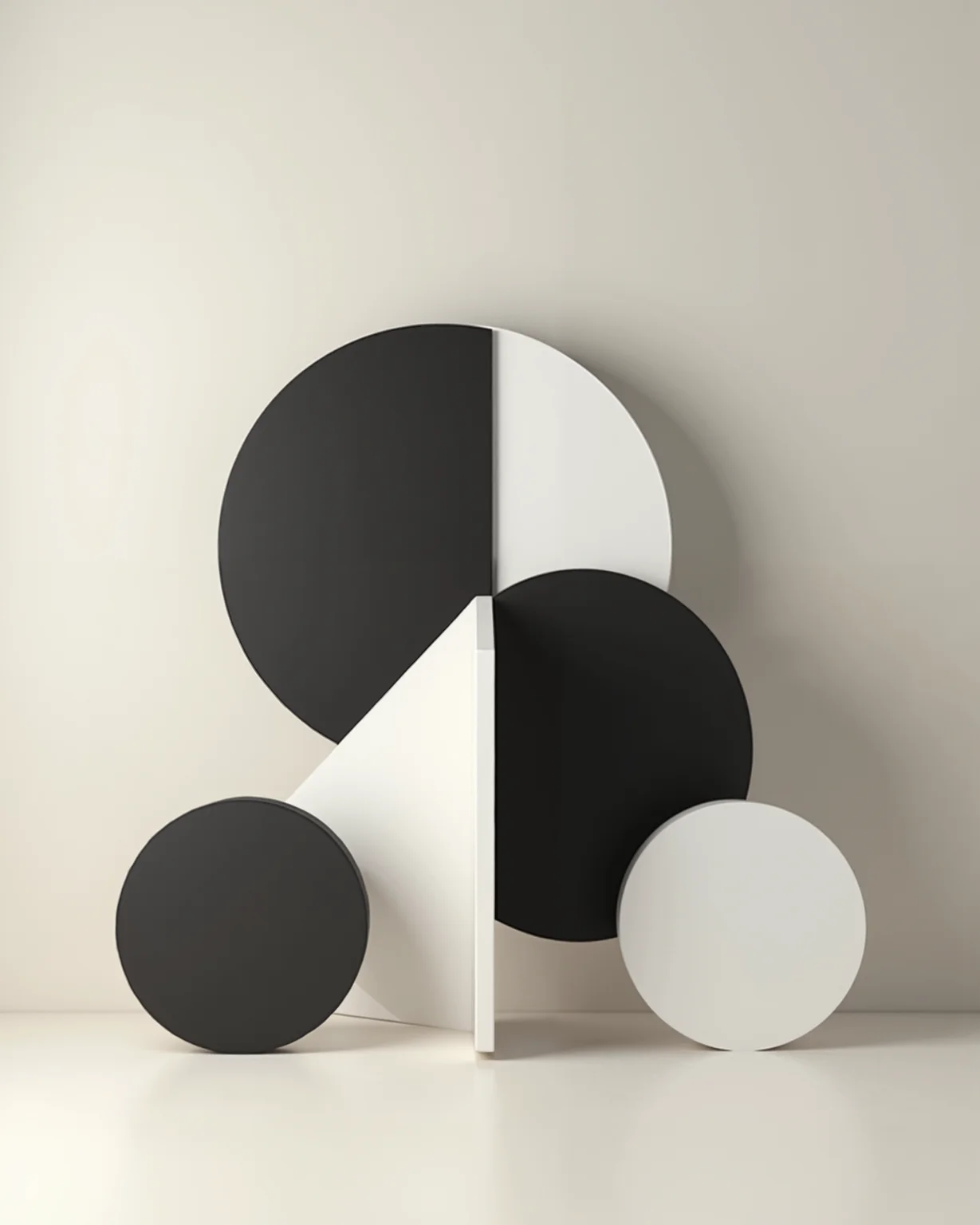
    Layer 1 (Primary Focus - The Shapes): Create a composition of simple geometric shapes—circles, squares, triangles—arranged in a balanced, symmetrical pattern. Each shape should be rendered in a solid, monochromatic color, such as black, white, or shades of gray. The edges of the shapes should be crisp and clean, with no texture or detail, emphasizing their pure forms.  Layer 2 (Background and Space): Position the shapes against a flat, neutral background, such as a soft beige or pale gray. The background should be free of any texture or gradient, providing a clean, uncluttered canvas for the shapes to stand out. The empty space around the shapes should be ample, creating a sense of balance and allowing the viewer to appreciate the simplicity of the composition.  Layer 3 (Lighting and Shadow): Introduce subtle, soft lighting that casts gentle shadows from the shapes, adding a sense of depth while maintaining the minimal aesthetic. The shadows should be faint and understated, creating a slight separation between the shapes and the background without overwhelming the simplicity of the scene. The overall atmosphere should be calm and orderly, with the focus on the relationship between the shapes and the empty space.  Layer 4 (Composition and Harmony): The composition should be carefully balanced, with the shapes arranged in a way that creates a sense of harmony and stability. The use of symmetry or mirrored patterns should enhance the feeling of order and simplicity, while the empty space around the shapes adds to the minimalistic approach. The scene should evoke a sense of calm and clarity, with the geometric forms representing the beauty of simplicity., high quality, sharp focus, dslr photo, UHD, 8k, high resolution, intricate detail
    Prompt

    Layer 1 (Primary Focus - The Shapes): Create a composition of simple geometric shapes—circles, squares, triangles—arranged in a balanced, symmetrical pattern. Each shape should be rendered in a solid, monochromatic color, such as black, white, or shades of gray. The edges of the shapes should be crisp and clean, with no texture or detail, emphasizing their pure forms. Layer 2 (Background and Space): Position the shapes against a flat, neutral background, such as a soft beige or pale gray. The background should be free of any texture or gradient, providing a clean, uncluttered canvas for the shapes to stand out. The empty space around the shapes should be ample, creating a sense of balance and allowing the viewer to appreciate the simplicity of the composition. Layer 3 (Lighting and Shadow): Introduce subtle, soft lighting that casts gentle shadows from the shapes, adding a sense of depth while maintaining the minimal aesthetic. The shadows should be faint and understated, creating a slight separation between the shapes and the background without overwhelming the simplicity of the scene. The overall atmosphere should be calm and orderly, with the focus on the relationship between the shapes and the empty space. Layer 4 (Composition and Harmony): The composition should be carefully balanced, with the shapes arranged in a way that creates a sense of harmony and stability. The use of symmetry or mirrored patterns should enhance the feeling of order and simplicity, while the empty space around the shapes adds to the minimalistic approach. The scene should evoke a sense of calm and clarity, with the geometric forms representing the beauty of simplicity., high quality, sharp focus, dslr photo, UHD, 8k, high resolution, intricate detail

    Generation Settings

    Parameters used to generate this content

    CFG Scale3.5
    Sampler
    Euler_beta
    Seed831485745398181
    Steps30
    Info
    Image
    Likes
    3
    Created
    8/21/2024
    Base Model
    Flux.1 D
    Source
    CivitAI
    Models Used

    AI models used to generate this content

    Actions