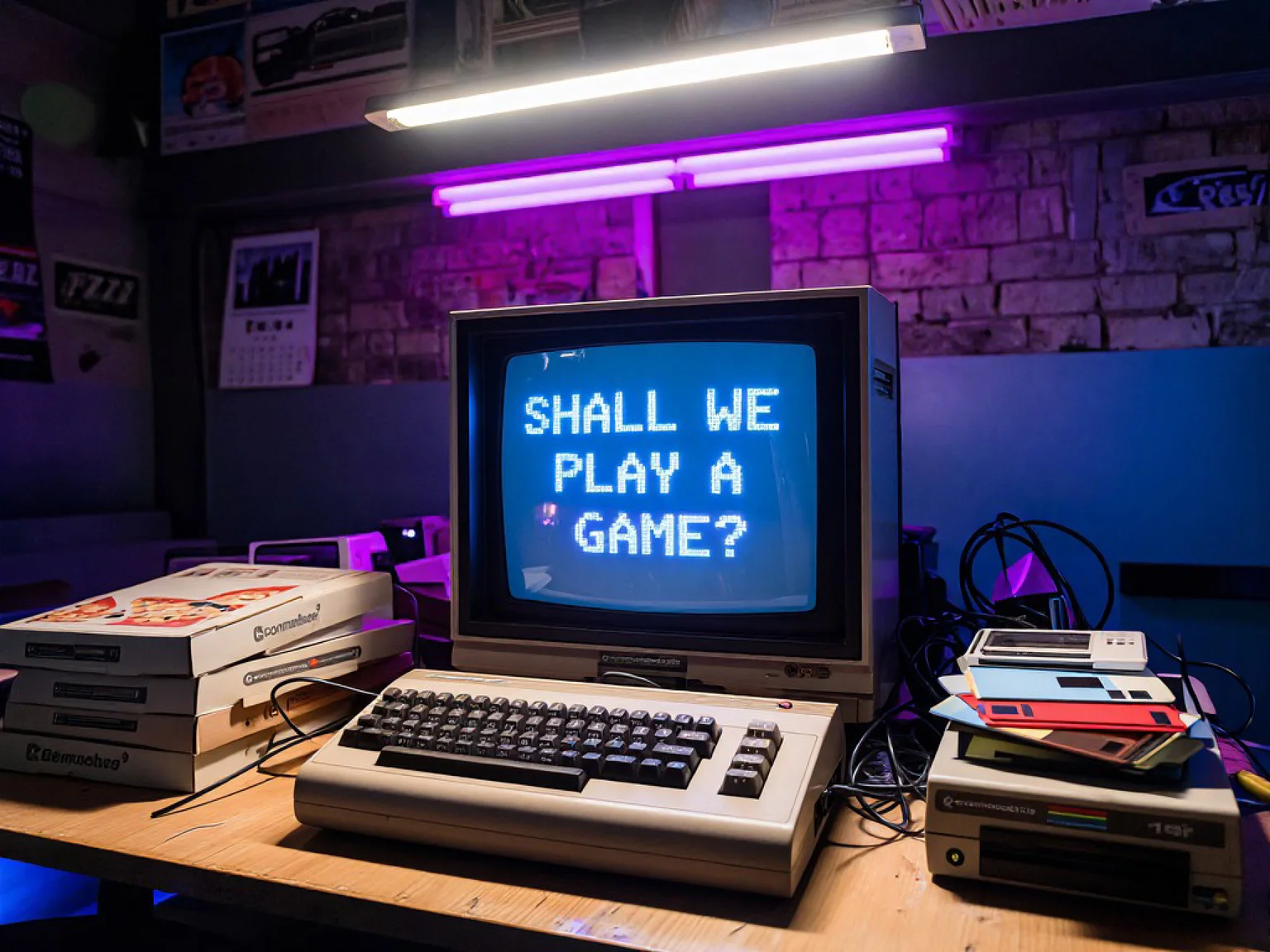
retro_c64 Create a photorealistic vivid image styled like authentic 1980s film photography capturing an intimate retro-tech scene centered on a vintage beige commodore monitor 1702 displaying a glowing screen with the text “SHALL WE PLAY A GAME?” in bold, pixelated blue letters with sharp white backlighting that casts deep shadows across the surrounding darkness; each letter consists of individual illuminated dots forming clean geometric shapes, slightly flickering as if powered by an old system, framed as if viewed through an old CRT monitor with subtle scan lines and slight vignetting around its edges, set against a soft desaturated blue background that fades gently from deep indigo at the top to lighter cerulean near the bottom of the frame, mimicking ambient room lighting reflecting off vintage computer hardware in dimly lit retro gaming den.The entire display has consistent pixelation depth, with each character block having a slight soft edge blur that simulates old CRT screen glow. Use muted or pastel color tones with warm hues that evoke nostalgia. Apply visible film grain texture uniformly across the image to replicate classic analog film. Employ soft, natural lighting with gentle shadows to mimic typical 80s lighting setups. Incorporate cultural references from the 1980s such as vintage fashion (e.g., high-waisted jeans, leather jackets, big hair), retro objects (cassette tapes, old-school cameras, vintage cars), or classic settings (arcades, diners, city streets with neon signs). Emphasize balanced color saturation and slightly lowered contrast to authentically reproduce the exposure characteristics of 1980s film photography. The composition should convey a nostalgic, warm, and timeless atmosphere typical of that era’s photography style. The screen emits soft volumetric glow casting subtle rim light along its edges while illuminating the surrounding objects in screen colour tones under two horizontal fluorescent tubes mounted above it— one emitting vibrant fuchsia, another cool cyan—that flicker slightly as if powered by an unstable circuitry system behind exposed brick wall panels with visible mortar lines and faint rust stains, some pin-up poster and a calender from 1981 are attached to the wall using adhesive tape. Below this setup rests a worn wooden desk surface showing signs of age: scratches along its grain pattern running diagonally from top-left to bottom-right; minor scuffs near the center where cables cluster together, creating chaotic yet intentional tangle patterns against dark matte black cords that snake across the frame in all directions. In front of the monitor, at a slight distance and not parallel to it, is a beige commodore c64 made entirely of plastic with a slightly glossy finish reflecting ambient light. To the right of the c64 lies a commodore floppy drive 1541 with its front slot closed and several floppy disks in vibrant colours are in various angles on top of the device, one red floppy disk lies directly in front of the floppy drive. To the left of the monitor are used and torned typical pizza boxes from "Pizza Angelo", a box with visible pizza leftovers ini on top of the boxes. The entire composition is framed using a shallow depth of field technique achieved through wide-angle lens shot taken at eye level directly above tabletop surface with slight Dutch tilt angle adding dynamic tension between foreground and background elements. The camera position allows full visibility into the intricate cable maze connecting every device while also emphasizing how they interlock both physically and functionally within this makeshift workstation environment. Dominant color palette consists of rich purples, deep magentas, cool blues mixed with warm beige tones creating a moody atmosphere reminiscent of underground hacker dens or late-night arcades where technology meets rebellion. Subsurface scattering enhances skin-like textures on the monitor casing while dust motes suspended in air catch glimmers from overhead lights producing ethereal halos around edges of objects giving scene an almost magical realism feel despite its gritty, industrial setting. Instead focus remains solely on the interplay between analog hardware and synthetic digital space merging seamlessly into one cohesive whole evoking nostalgia, mystery, and technological transcendence through minimalistic design choices. Lighting originates primarily from two sources: primary source emanating directly above monitor screen casting diffused illumination downward onto keyboard area while secondary lighting comes via fluorescent tubes overhead producing sharp contrasting highlights along vertical brick wall surfaces enhancing sense of dimensionality. Shadows fall naturally across objects creating dramatic contrast between brightly lit zones and darker recessed areas giving impression that entire scene exists within enclosed space with limited external light penetration. Every detail matters—from the precise curvature of CRT screen bezel to minute imperfections in plastic casing textures, from subtle wear marks on datasette buttons to exact positioning of individual wires coiled around baseboard corners. This image should feel tactile and immersive inviting viewer to step inside this world without ever needing to leave their chair—perfect for fans seeking authentic representation of retro computing culture infused with modern cyberpunk sensibilities. All objects are naturally aged by time or usage with fingerprints and scratches. Background elements like exposed wiring running along ceiling beams and faint electrical hum audible in ambient sound mix further deepen immersion into this artificially constructed universe where past meets present through shared technological language. <lora:c64stuff_epoch_7:1>
Parameters used to generate this content
Copies the original metadata text embedded by AUTOMATIC1111.
AI models used to generate this content