🖼️ Loading...
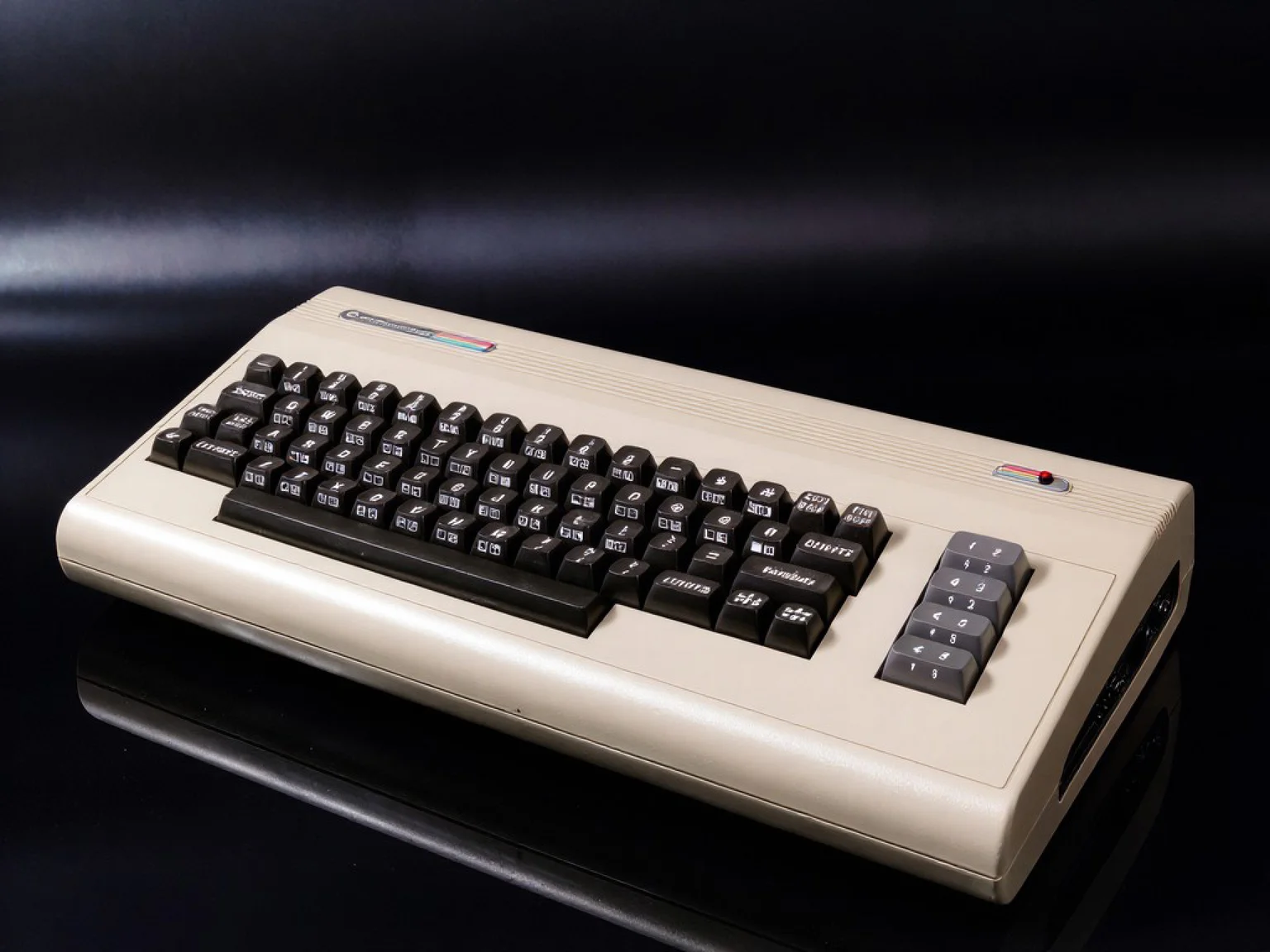
    retro_c64, english_text, no_humans, realistic, clock, pen, computer, pencil, still_life.  Create a photorealistic vivid image styled like authentic 1980s film photography  capturing an intimate retro-tech scene. Use muted or pastel color tones with warm hues that evoke nostalgia. Apply visible film grain texture uniformly across the image to replicate classic analog film. Employ soft, natural lighting with gentle shadows to mimic typical 80s lighting setups. Incorporate cultural references from the 1980s such as vintage fashion (e.g., high-waisted jeans, leather jackets, big hair), retro objects (cassette tapes, old-school cameras, vintage cars), or classic settings (arcades, diners, city streets with neon signs).   Emphasize balanced color saturation and slightly lowered contrast to authentically reproduce the exposure characteristics of 1980s film photography. The composition should convey a nostalgic, warm, and timeless atmosphere typical of that era’s photography style.      Create a studio advertisement poster for the Commodore C64 home computer from its original late 1980s era. The image is shot with an ultra-wide angle lens at eye level on a glossy black reflective surface that mirrors only the bottom edge of the machine and faintly reflects ambient light sources above it; depth-of-field renders the keyboard in razor-sharp focus while softly blurring background elements into cinematic bokeh, emphasizing product clarity against minimalism.   The Commodore 64 sits diagonally across center-left to right-bottom quadrant with its beige plastic casing gleaming under precise directional studio lighting from upper left casting subtle volumetric shadows and rim highlights along edges of the case; keyboard keys are black rectangular buttons arranged in standard QWERTY layout, each labeled clearly with white sans-serif font for legibility. The machine’s front panel features a small silver Commodore logo embossed near top center beneath two horizontal grooves running parallel to its length. On the right side edge protrudes a built-in joystick port and three square function keys (F1-F3) positioned above numeric keypad area; below these functions lie arrow navigation buttons forming an L-shape with directional arrows pointing left, up, down, and right respectively.  The entire scene is bathed in dramatic chiaroscuro lighting setup: primary light source originates from top-left corner, creating strong specular highlights on keyboard keys while casting long soft shadows across lower right side of machine body. A faint haze or dust motes float gently around perimeter, catching light beams to simulate atmospheric perspective in indoor studio setting.  The background consists entirely of seamless matte black surface extending uniformly throughout frame without any distractions — no logos, no text overlays beyond specified branding elements at top and bottom; only pure absence allows product prominence. The flooring appears smooth reflective material resembling polished obsidian or high-gloss vinyl with faint concentric circular ripples radiating outward from point where machine rests, suggesting slight movement of surface during photography session.  Camera angle is slightly elevated looking down at subject from about 10 degrees above horizontal plane creating slight perspective distortion enhancing sense of scale and realism.  The overall mood evokes nostalgia for early personal computing revolution combined with sleek technological sophistication through meticulous attention to detail — every screw head visible on casing edge, each keycap texture variation under magnification lens, even the precise curvature where plastic meets metal housing. Skin tones appear natural yet subtly enhanced by professional lighting techniques; colors are rich and saturated without oversaturation or artificial glare — true-to-life representation of era’s iconic computer design.  All materials rendered with high fidelity: matte black keyboard keys contrast sharply against beige casing which has faint microtexture mimicking injection-molded plastic grain. The “64” gradient uses smooth transitions between hues to mimic actual printed ink bleed rather than digital flat color fills, giving it authentic vintage magazine ad feel. Lighting effects include subsurface scattering on glossy surfaces creating believable light diffusion beneath translucent layers; volumetric fog adds soft haze layer behind machine enhancing separation from dark background.  No clothing or characters appear in image — focus remains solely upon the Commodore 64 computer system as solitary centerpiece surrounded by abstract graphical elements and minimalistic typography. No people, animals, plants, vehicles, furniture, accessories present anywhere within frame. The entire composition is devoid of any extraneous objects or clutter — pure advertising aesthetic designed to showcase product functionality without distraction.  This image should emulate the look of a professionally printed magazine cover shot using high-resolution digital photography with slight film grain texture added post-production, enhancing tactile realism while preserving crisp edge definition and fine detail rendering characteristic of 1980s tech marketing campaigns. The final output must exhibit cinematic quality through dynamic contrast ratios, rich color saturation, ultra-sharp focus on critical areas like keyboard keys, logo details, and text legibility — all contributing to immersive visual experience for viewer interpreting this as authentic historical artifact from Commodore's golden age of home computing innovation <lora:retro_c64:1>
    Prompt

    retro_c64, english_text, no_humans, realistic, clock, pen, computer, pencil, still_life. Create a photorealistic vivid image styled like authentic 1980s film photography capturing an intimate retro-tech scene. Use muted or pastel color tones with warm hues that evoke nostalgia. Apply visible film grain texture uniformly across the image to replicate classic analog film. Employ soft, natural lighting with gentle shadows to mimic typical 80s lighting setups. Incorporate cultural references from the 1980s such as vintage fashion (e.g., high-waisted jeans, leather jackets, big hair), retro objects (cassette tapes, old-school cameras, vintage cars), or classic settings (arcades, diners, city streets with neon signs). Emphasize balanced color saturation and slightly lowered contrast to authentically reproduce the exposure characteristics of 1980s film photography. The composition should convey a nostalgic, warm, and timeless atmosphere typical of that era’s photography style. Create a studio advertisement poster for the Commodore C64 home computer from its original late 1980s era. The image is shot with an ultra-wide angle lens at eye level on a glossy black reflective surface that mirrors only the bottom edge of the machine and faintly reflects ambient light sources above it; depth-of-field renders the keyboard in razor-sharp focus while softly blurring background elements into cinematic bokeh, emphasizing product clarity against minimalism. The Commodore 64 sits diagonally across center-left to right-bottom quadrant with its beige plastic casing gleaming under precise directional studio lighting from upper left casting subtle volumetric shadows and rim highlights along edges of the case; keyboard keys are black rectangular buttons arranged in standard QWERTY layout, each labeled clearly with white sans-serif font for legibility. The machine’s front panel features a small silver Commodore logo embossed near top center beneath two horizontal grooves running parallel to its length. On the right side edge protrudes a built-in joystick port and three square function keys (F1-F3) positioned above numeric keypad area; below these functions lie arrow navigation buttons forming an L-shape with directional arrows pointing left, up, down, and right respectively. The entire scene is bathed in dramatic chiaroscuro lighting setup: primary light source originates from top-left corner, creating strong specular highlights on keyboard keys while casting long soft shadows across lower right side of machine body. A faint haze or dust motes float gently around perimeter, catching light beams to simulate atmospheric perspective in indoor studio setting. The background consists entirely of seamless matte black surface extending uniformly throughout frame without any distractions — no logos, no text overlays beyond specified branding elements at top and bottom; only pure absence allows product prominence. The flooring appears smooth reflective material resembling polished obsidian or high-gloss vinyl with faint concentric circular ripples radiating outward from point where machine rests, suggesting slight movement of surface during photography session. Camera angle is slightly elevated looking down at subject from about 10 degrees above horizontal plane creating slight perspective distortion enhancing sense of scale and realism. The overall mood evokes nostalgia for early personal computing revolution combined with sleek technological sophistication through meticulous attention to detail — every screw head visible on casing edge, each keycap texture variation under magnification lens, even the precise curvature where plastic meets metal housing. Skin tones appear natural yet subtly enhanced by professional lighting techniques; colors are rich and saturated without oversaturation or artificial glare — true-to-life representation of era’s iconic computer design. All materials rendered with high fidelity: matte black keyboard keys contrast sharply against beige casing which has faint microtexture mimicking injection-molded plastic grain. The “64” gradient uses smooth transitions between hues to mimic actual printed ink bleed rather than digital flat color fills, giving it authentic vintage magazine ad feel. Lighting effects include subsurface scattering on glossy surfaces creating believable light diffusion beneath translucent layers; volumetric fog adds soft haze layer behind machine enhancing separation from dark background. No clothing or characters appear in image — focus remains solely upon the Commodore 64 computer system as solitary centerpiece surrounded by abstract graphical elements and minimalistic typography. No people, animals, plants, vehicles, furniture, accessories present anywhere within frame. The entire composition is devoid of any extraneous objects or clutter — pure advertising aesthetic designed to showcase product functionality without distraction. This image should emulate the look of a professionally printed magazine cover shot using high-resolution digital photography with slight film grain texture added post-production, enhancing tactile realism while preserving crisp edge definition and fine detail rendering characteristic of 1980s tech marketing campaigns. The final output must exhibit cinematic quality through dynamic contrast ratios, rich color saturation, ultra-sharp focus on critical areas like keyboard keys, logo details, and text legibility — all contributing to immersive visual experience for viewer interpreting this as authentic historical artifact from Commodore's golden age of home computing innovation <lora:retro_c64:1>

    Generation Settings

    Parameters used to generate this content

    Created with
    AUTOMATIC1111
    CFG Scale1.2
    Sampler
    DDIM_simple
    Seed965593979905226
    Steps8

    Copies the original metadata text embedded by AUTOMATIC1111.

    Info
    Image
    Likes
    0
    Created
    2/10/2026
    Source
    CivitAI
    Models Used

    AI models used to generate this content

    Actions