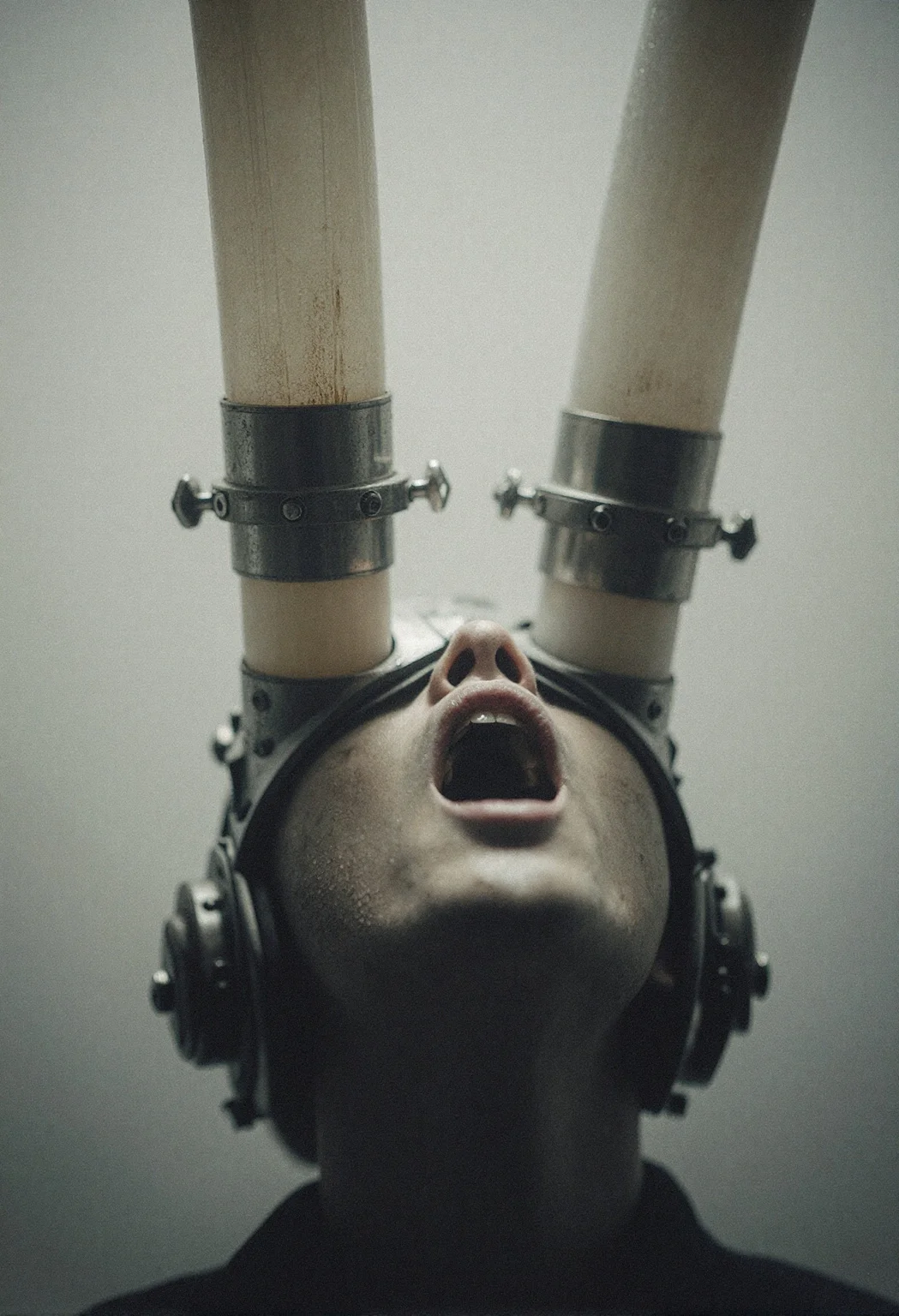
zidiusArt. A solitary human figure is captured in an extreme upward-facing close-up, the head tilted back so far that the throat is fully exposed and the face opens toward an unseen ceiling or sky. The subject wears a heavy, industrial head-mounted apparatus that completely obscures the eyes, clamping tightly around the skull like an archaic life-support device or a relic of forgotten experimentation. From the center of the mechanism emerge two massive, thick cylindrical tubes, far wider than any medical tubing, resembling industrial hoses rather than delicate conduits. The tubes cross forcefully above the face before plunging directly into the eye sockets, their scale overwhelming the human features beneath them. The mouth is stretched wide open in a frozen moment of strain or surrender, teeth bared, jaw pushed beyond comfort, as if the body is reacting instinctively to the intrusion above. The lighting is stark and clinical, yet softened by haze, as if filtered through dust or sterilized air. A pale, desaturated glow fills the background, nearly white but textured with grain, eliminating any sense of location or escape. Deep shadows collect beneath the chin, inside the open mouth, and around the edges of the apparatus, intensifying the contrast between vulnerable flesh and oppressive machinery. The thick tubes are softly illuminated from within, their milky, semi-opaque surfaces showing condensation, residue, and subtle internal shadows that hint at slow movement or pressure inside. The color palette remains restrained and cold—bone whites, industrial grays, dull metal tones, and muted human skin—rendered without warmth. Fine film grain and slight vignetting enhance the tactile, cinematic weight of the image. The emotional atmosphere is suffocating and deeply melancholic. The sheer thickness of the tubes transforms the scene from medical intervention into something ritualistic and dehumanizing, as if the body has been repurposed as infrastructure rather than patient. The figure appears suspended between endurance and erasure, no longer fully human, not yet entirely machine. There is no visible violence, only inevitability—control enacted through scale and restraint. The absence of context amplifies the unease, leaving the viewer with a quiet, lingering sorrow, as though witnessing the final still moment before identity dissolves completely into function.,
Parameters used to generate this content
Copies the original metadata text embedded by AUTOMATIC1111.
AI models used to generate this content