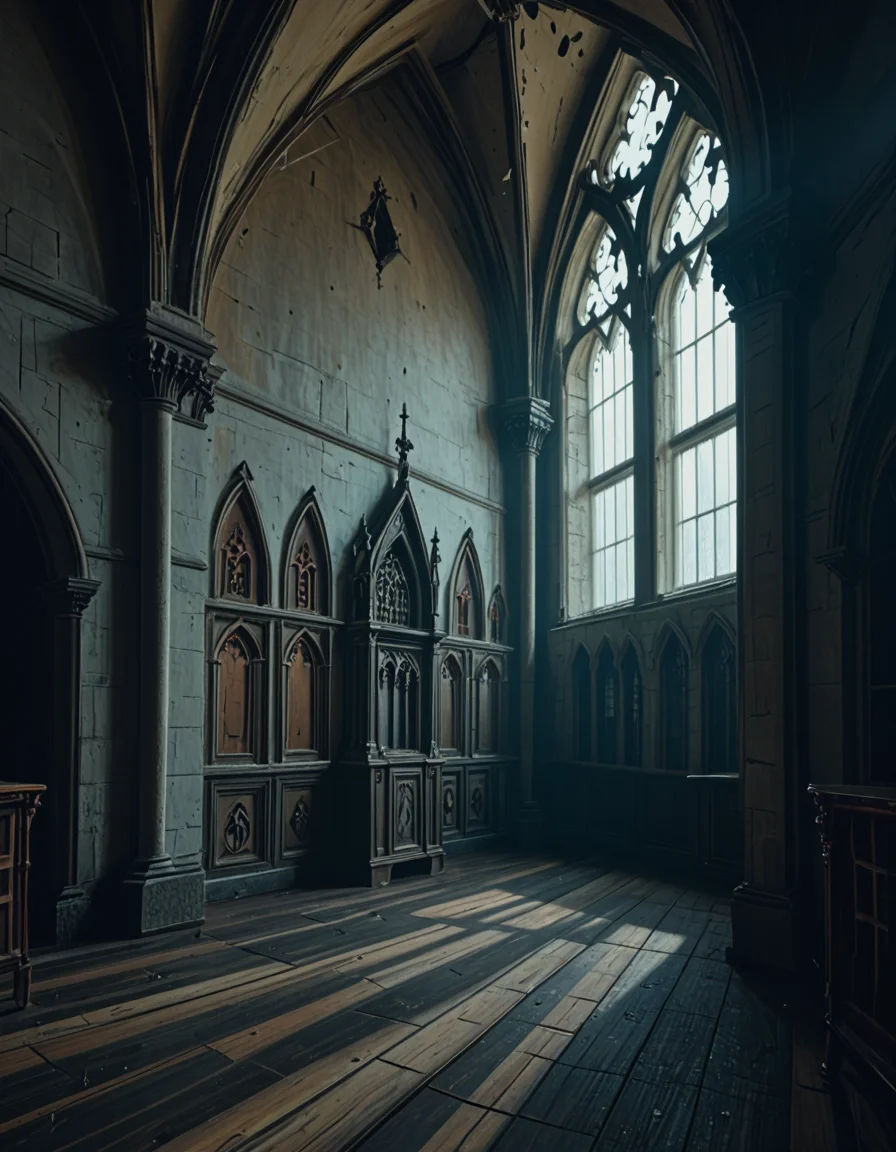
<lora:training_2617621-20251208122121437:1> RO9. Bathed in a cold, diffused light that filters through tall, pallid lancet windows, this deserted corridor feels suspended in time—silent, solemn, and steeped in a mournful grace. The vaulted ceiling arches high above, its pale plaster worn and cracked, drawing the eye upward as if in silent supplication to a forgotten heaven. Faded Gothic tracery lines the tall, narrow windows, their panes frosted with the remnants of age and neglect. Along the walls, an array of carved panels and disassembled wooden structures lie abandoned, propped and stacked like relics from a dismantled past. Empty niches and shadowed archways punctuate the crumbling stonework, suggesting the ghosts of sacred statuary long removed. The contrast between the alabaster glow in the upper reaches and the deeper, bluish shadows clinging to the lower walls and floorboards lends the space an otherworldly duality—half sanctum, half tomb. Each uneven wooden plank underfoot seems to whisper secrets of a time when the room may have echoed with footsteps and reverence, now hushed into stillness. There is a quiet dignity here, a sense that this chamber—though abandoned—remembers its purpose, its history held delicately in the filtered light and the silence that presses in like a prayer unanswered.
Parameters used to generate this content
Copies the original metadata text embedded by AUTOMATIC1111.
AI models used to generate this content