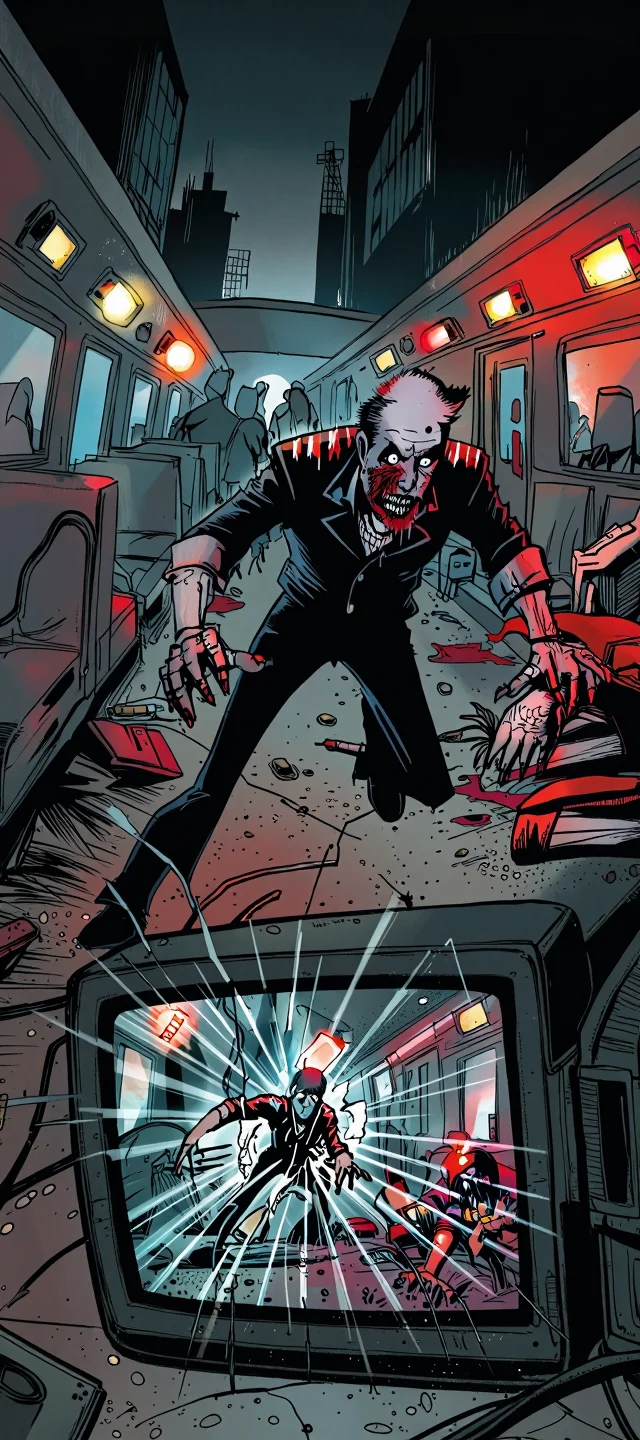
The image is a high-quality, gritty digital artwork rendered in bold American comic book style, captured with a dramatic wide shot that frames a fallen DV camera on the ground as the central narrative device, its cracked screen displaying a horrific scene of zombies rampaging through a derailed train car in a poster-like composition that screams apocalyptic horror. The overall framing mimics a movie poster layout, with the shattered DV screen dominating the lower third of the frame like a warped window into chaos, radial cracks spiderwebbing across its LCD surface and distorting the embedded footage into glitchy, pixelated fragments—flickering static lines and color bleeds adding a meta layer of found-footage realism. Through this fractured portal, a swarm of undead horrors tears through the confined space of a subway train, blood-splattered seats and dangling handrails twisted in carnage, as passengers in various states of terror and transformation are overwhelmed in a brutal melee. The zombies are stylized in classic comic aesthetics—inspired by artists like Robert Kirkman or Bernie Wrightson—with heavy inking, exaggerated musculature, and visceral details: a central hulking zombie in tattered conductor's uniform lunges at a screaming survivor, its jaw unhinged and dripping gore, exposed ribs gleaming through shredded flesh, while others claw at barricaded doors or feast on fallen victims, their eyes glowing with feral yellow intensity. The train interior is a claustrophobic nightmare—overturned luggage spilling contents, emergency lights casting erratic flashes, and bodies piled in gruesome heaps—rendered with dynamic motion lines and speed streaks to convey frenzied violence. The DV camera itself lies tilted on cracked pavement, perhaps in a rain-slicked street outside the wreck, with realistic debris like scattered batteries and a broken lens cap enhancing the "found object" illusion, the screen's fractures warping zombie faces into nightmarish distortions for added surreal dread. The camera angle is a low ground-level perspective looking slightly up at the fallen device, as if the viewer is a survivor witnessing the horror unfold from hiding, emphasizing the poster's dramatic tension and drawing the eye through the screen's breakage into the embedded scene. The lighting is dramatic chiaroscuro with hard side beams simulating flickering train fluorescents and external streetlamps piercing through the cracks, casting stark shadows that sculpt the zombies' decayed textures—oozing wounds, jagged claws, and bloodied maws—with high contrast to mimic comic panel depth. Highlights glint on shattered glass and pooling blood, creating a visceral, pulsating glow that bleeds into the outer frame. In the background, the external environment provides ominous context: a dark urban alley with distant sirens and shadowy figures fleeing, blurred to focus on the DV screen, adding layers of isolation and impending doom. The composition follows a rule of thirds layout for poster appeal, positioning the cracked screen at the lower intersection, with leading lines from fractures guiding the eye into the train's chaos, balanced by negative space around the device for visual breathing room. The depth of field is medium at f/4.0, keeping the DV camera and its distorted screen in sharp, detailed focus while softly blurring the surrounding pavement for immersive layering, enhancing the surreal "window to hell" effect. The color grading is desaturated with high-contrast vibrant pops—muted grays and blues for the urban night, accented by crimson blood sprays and neon emergency lights—evoking a vintage horror comic palette with faded, glitchy overlays for an aged, pulp terror feel. The overall aesthetic is exceptionally high, with an 8K ultra-detailed render that blends comic illustration with photorealistic breakage, feeling like a frame from a blockbuster zombie thriller poster. The mood evokes unrelenting savagery, desperate survival, and meta-horror, celebrating the raw intensity of American undead lore in a visually shattering, train-wreck spectacle.
Parameters used to generate this content
The node graph used to generate this content — pan and zoom to explore, or download it to run in ComfyUI.
AI models used to generate this content