Claude Monet [FLUX](FLUX.1-dev)
Showing 20 posts created with this model
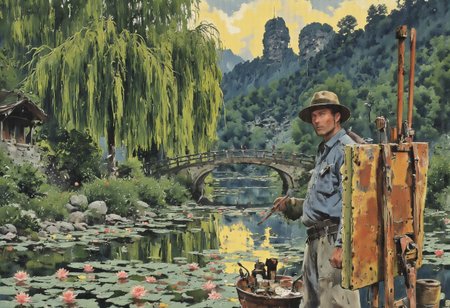
Claude Monet, the renowned Impressionist artist, standing stoically in his Giverny garden in 1914. His eyes are steely with determination as the distant rumble of artillery pierces the tranquil air. He is surrounded by a riot of colorful flowers: vibrant lilies float atop the pond's serene surface, their reflections shimmering under the soft light of a setting sun, while a canopy of green willows arch gracefully over the water's edge. The iconic Japanese bridge stretches across the water, connecting the lush banks. The painter himself is in the foreground, dressed in his signature straw hat and blue smock, palette in hand, brushes resting against a wooden easel that holds a canvas partially obscured by his body. The colors on the palette mirror the hues of the garden, suggesting his deep connection to the natural world. Despite the looming shadow of war, the vividness of Monet's surroundings stands as a testament to his unyielding resolve to continue his artistic endeavors amidst the chaos. The scene is suffused with a poignant silence, a stark contrast to the cacophony of battle that echoes in the distance, serving as a symbol of beauty's steadfastness in the face of destruction. The composition is framed by the darkened sky, hinting at the impending nightfall that metaphorically reflects the tumultuous times, yet it is pierced by a sliver of golden light, a beacon of hope that persists over the horizon of his beloved sanctuary.
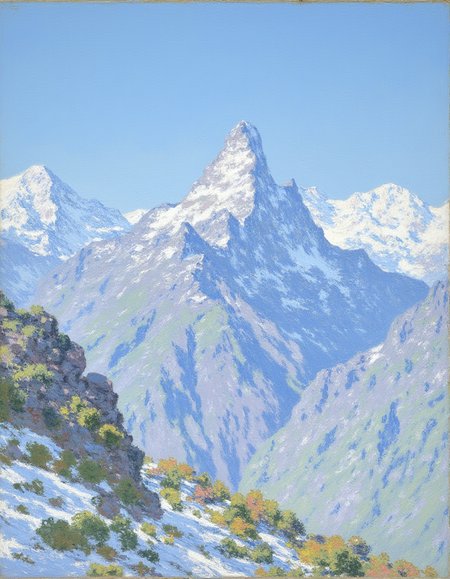
snow-capped mountains with a clear blue sky in the background, by Claude Monet
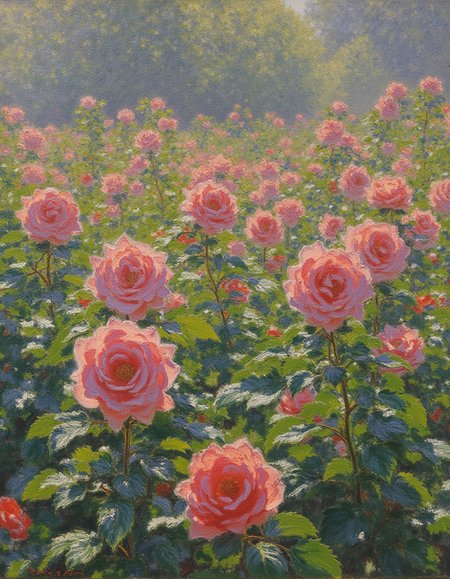
a vibrant rose garden with dew on the petals, under the soft morning light, by Claude Monet
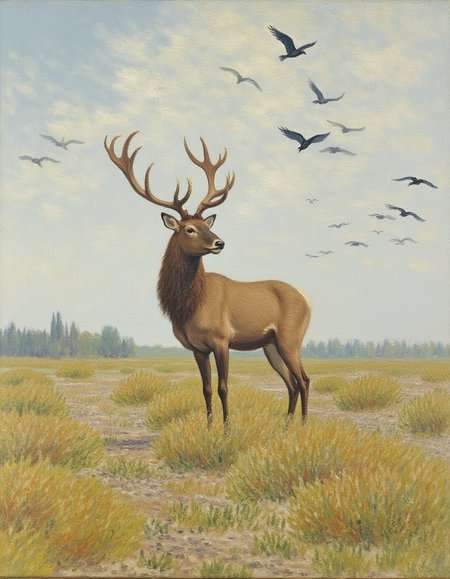
a majestic stag standing in a clearing, with a flock of birds flying overhead, distinctive style, by Claude Monet

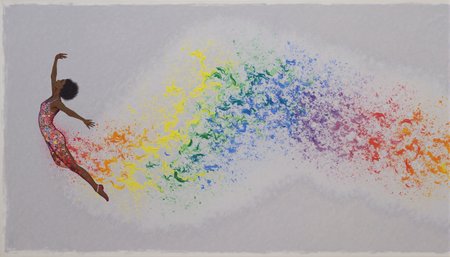
the abstract concept of 'joy' as a burst of radiant light and swirling colors, all converging in a dance that captures the essense of art, by Claude Monet
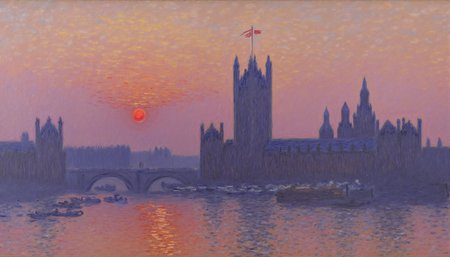
painting of the British Parliament building at sunset, by Claude Monet, tags: sunset, River Thames, Houses of Parliament, reflections on water, atmospheric, purple hue, orange sun, silhouetted structures, historical architecture, London, soft light, tranquil, skyline, no people
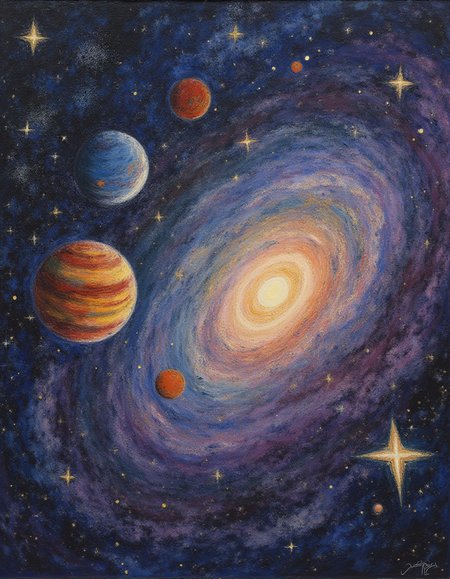
a celestial dance with planets aligning in the cosmos, surrounded by a nebula's iridescent colors, in the cosmic style, by Claude Monet
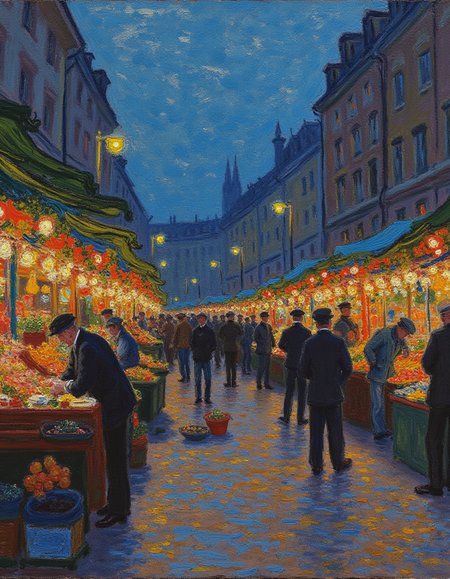
showcasing a bustling urban street market at dusk, the stalls lit with string lights, vibrant and colorful, by Claude Monet
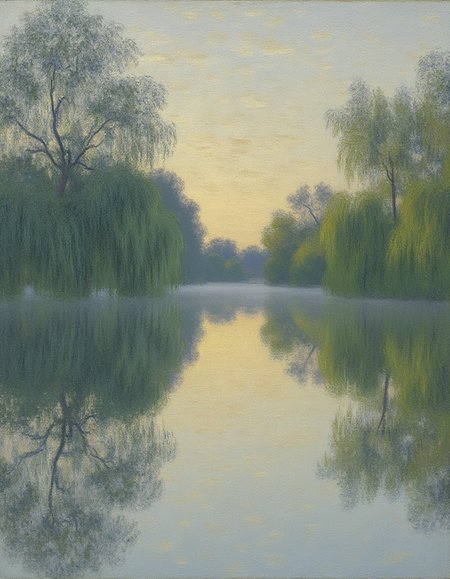
a serene lake with a mirror-like surface at dawn, surrounded by weeping willows, by Claude Monet
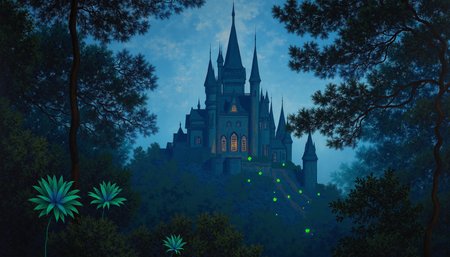
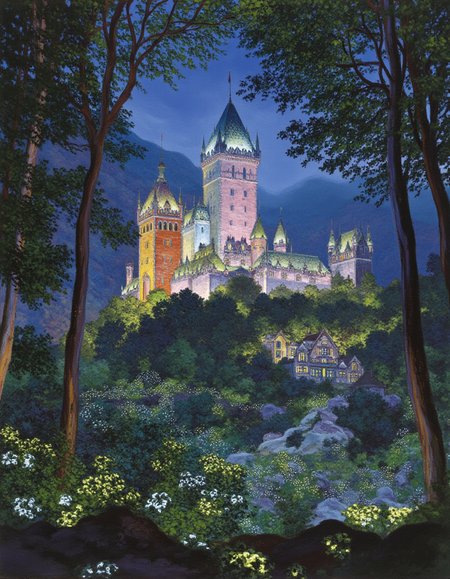
painting by Claude Money, a grand castle with soaring towers hidden within an enchanted forest, teeming with bioluminescent plants and creatures, in the mystical style
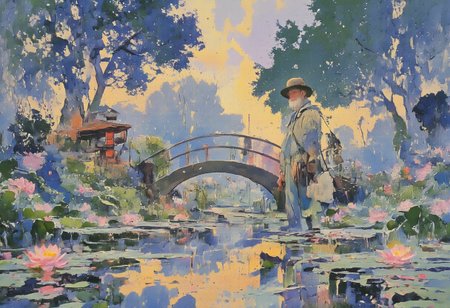
Claude Monet, the renowned Impressionist artist, standing stoically in his Giverny garden in 1914. His eyes are steely with determination as the distant rumble of artillery pierces the tranquil air. He is surrounded by a riot of colorful flowers: vibrant lilies float atop the pond's serene surface, their reflections shimmering under the soft light of a setting sun, while a canopy of green willows arch gracefully over the water's edge. The iconic Japanese bridge stretches across the water, connecting the lush banks. The painter himself is in the foreground, dressed in his signature straw hat and blue smock, palette in hand, brushes resting against a wooden easel that holds a canvas partially obscured by his body. The colors on the palette mirror the hues of the garden, suggesting his deep connection to the natural world. Despite the looming shadow of war, the vividness of Monet's surroundings stands as a testament to his unyielding resolve to continue his artistic endeavors amidst the chaos. The scene is suffused with a poignant silence, a stark contrast to the cacophony of battle that echoes in the distance, serving as a symbol of beauty's steadfastness in the face of destruction. The composition is framed by the darkened sky, hinting at the impending nightfall that metaphorically reflects the tumultuous times, yet it is pierced by a sliver of golden light, a beacon of hope that persists over the horizon of his beloved sanctuary.
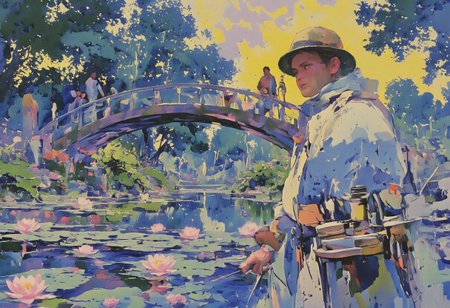
Claude Monet, the renowned Impressionist artist, standing stoically in his Giverny garden in 1914. His eyes are steely with determination as the distant rumble of artillery pierces the tranquil air. He is surrounded by a riot of colorful flowers: vibrant lilies float atop the pond's serene surface, their reflections shimmering under the soft light of a setting sun, while a canopy of green willows arch gracefully over the water's edge. The iconic Japanese bridge stretches across the water, connecting the lush banks. The painter himself is in the foreground, dressed in his signature straw hat and blue smock, palette in hand, brushes resting against a wooden easel that holds a canvas partially obscured by his body. The colors on the palette mirror the hues of the garden, suggesting his deep connection to the natural world. Despite the looming shadow of war, the vividness of Monet's surroundings stands as a testament to his unyielding resolve to continue his artistic endeavors amidst the chaos. The scene is suffused with a poignant silence, a stark contrast to the cacophony of battle that echoes in the distance, serving as a symbol of beauty's steadfastness in the face of destruction. The composition is framed by the darkened sky, hinting at the impending nightfall that metaphorically reflects the tumultuous times, yet it is pierced by a sliver of golden light, a beacon of hope that persists over the horizon of his beloved sanctuary.
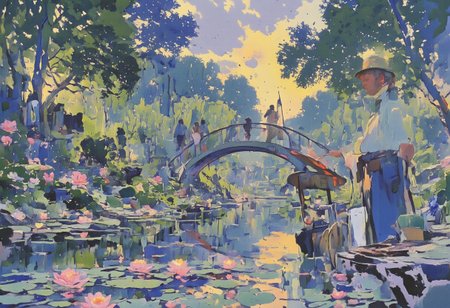
Claude Monet, the renowned Impressionist artist, standing stoically in his Giverny garden in 1914. His eyes are steely with determination as the distant rumble of artillery pierces the tranquil air. He is surrounded by a riot of colorful flowers: vibrant lilies float atop the pond's serene surface, their reflections shimmering under the soft light of a setting sun, while a canopy of green willows arch gracefully over the water's edge. The iconic Japanese bridge stretches across the water, connecting the lush banks. The painter himself is in the foreground, dressed in his signature straw hat and blue smock, palette in hand, brushes resting against a wooden easel that holds a canvas partially obscured by his body. The colors on the palette mirror the hues of the garden, suggesting his deep connection to the natural world. Despite the looming shadow of war, the vividness of Monet's surroundings stands as a testament to his unyielding resolve to continue his artistic endeavors amidst the chaos. The scene is suffused with a poignant silence, a stark contrast to the cacophony of battle that echoes in the distance, serving as a symbol of beauty's steadfastness in the face of destruction. The composition is framed by the darkened sky, hinting at the impending nightfall that metaphorically reflects the tumultuous times, yet it is pierced by a sliver of golden light, a beacon of hope that persists over the horizon of his beloved sanctuary.
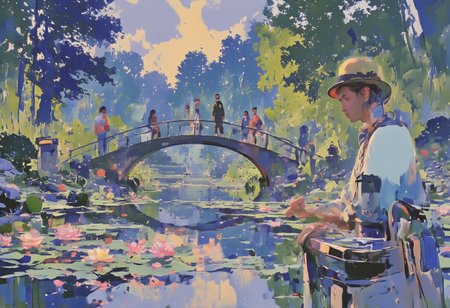
Claude Monet, the renowned Impressionist artist, standing stoically in his Giverny garden in 1914. His eyes are steely with determination as the distant rumble of artillery pierces the tranquil air. He is surrounded by a riot of colorful flowers: vibrant lilies float atop the pond's serene surface, their reflections shimmering under the soft light of a setting sun, while a canopy of green willows arch gracefully over the water's edge. The iconic Japanese bridge stretches across the water, connecting the lush banks. The painter himself is in the foreground, dressed in his signature straw hat and blue smock, palette in hand, brushes resting against a wooden easel that holds a canvas partially obscured by his body. The colors on the palette mirror the hues of the garden, suggesting his deep connection to the natural world. Despite the looming shadow of war, the vividness of Monet's surroundings stands as a testament to his unyielding resolve to continue his artistic endeavors amidst the chaos. The scene is suffused with a poignant silence, a stark contrast to the cacophony of battle that echoes in the distance, serving as a symbol of beauty's steadfastness in the face of destruction. The composition is framed by the darkened sky, hinting at the impending nightfall that metaphorically reflects the tumultuous times, yet it is pierced by a sliver of golden light, a beacon of hope that persists over the horizon of his beloved sanctuary.